Date - Time - Location
Thursday, October 29, 2026
11:00 a.m. - 5:30 p.m.
The Houstonian Hotel
111 N Post Oak Ln
Houston, TX 77024

Gain actionable takeaways to better serve your clients and businesses.
Thursday, October 29, 2026
11:00 a.m. - 5:30 p.m.
The Houstonian Hotel
111 N Post Oak Ln
Houston, TX 77024
$150.00 - Digital Materials Only
$225.00 - Digital + Print Materials
$175.00 per person for Walk-In Registration (if space allows). For attendees that prefer, a hard copy binder is available for $75.00 per binder.
**All costs include food and refreshments
Texas CLE: 5.0 Credit Hours
Texas CPE: 6.0 Credit Hours
-1.png?width=320&height=400&name=atbps%20landing%20page%20header%20image%20(2)-1.png "atbps landing page header image (2)-1")
Director, Houston Population Research Center
Kinder Research Institute for Urban Research at Rice University
Dan Potter directs the survey work for the Houston Population Research Center at the Kinder Institute for Urban Research at Rice University. This includes overseeing the Greater Houston Community Panel (GHCP), the Kinder Houston Area Survey, the Asian American Community Study, and the Houston LOVE Survey. These studies get done with a wonderful team of colleagues who take surveys from start to finish in service to better understanding the values, attitudes, and experiences of the people and their lives in the Houston region.
Use the "+" signs to expand the boxes and learn more about each presentation.
Stop by the check-in tables to pick up your seminar badge and materials.
The Economy, Housing Affordability, Disaster Preparedness, and the Importance of Social Connections: Findings from the Greater Houston Community Panel, Dan Potter, Ph.D.
The Houston area is one of the fastest growing metro regions in the country over the last two decades, and a key to its growth has been the economic opportunities the region provides. Over the past year, Houston-area residents have become increasingly alarmed about the economy, which poses a risk to the Houston region's continued growth. Other risks to the Houston area include an increasingly unaffordable housing market as well as severe weather and natural disasters. In the face of these risks, one way the Houston area can continue to grow and prosper is by improving its investments in social connectedness. Doing so will help improve people's wealth, health, and sense of safety.
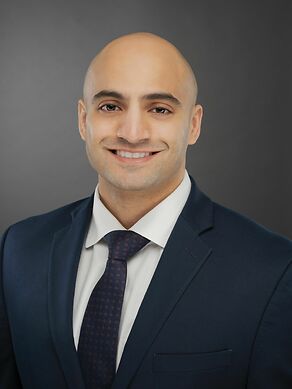
Beware of the Odyssey and Siren's Call: Self-Employment Tax Traps and Potential Workarounds for Businesses,
Habeeb "Hobbs" Gnaim
Under federal tax law, the owner of a single-member LLC and a partner in an entity taxed as a partnership cannot be reported as a W-2 employee of that same entity. Many businesses rush to make an S corporation election to alleviate this issue. This presentation will explore this common scenario and discuss why an S corporation election may not be the best long-term solution. It will also cover various workarounds for owners of these entities that want to be reported as a W-2 employee, strategies for incentivizing key employees without making them owners of the entity, an overview of self-employment tax issues, and recent court decisions that might further complicate these matters for business owners.
GST for Dummies , Christine Borrett
Reporting GST allocations on 709s and 706s; Funding, Splitting, and Terminating Trusts—the basics.
Coming in from the Cold: Options for Non-Compliant Taxpayers, Larry A. Campagna and Alissa Gipson
Non-filers and other non-compliant taxpayers have a number of potential pathways to resolve their issues with the IRS. This presentation will discuss: the newly revised voluntary disclosure program, streamlined filing procedures, qualified amended returns, and other corrective measures. The focus will be on recent enforcement trends and practical considerations for the strategic decisions applicable to a taxpayer's specific facts and exposure.
The PFIC Underworld: Getting Past Cerberus, Sebastien N. Chain
This presentation will cover when a foreign company qualifies as a PFIC, when a US person has a direct or indirect interest in a PFIC, including through multi-tiered structures, income realization under the excess distribution regime, qualified electing fund regime, and mark to market election, and open issues with PFICs.
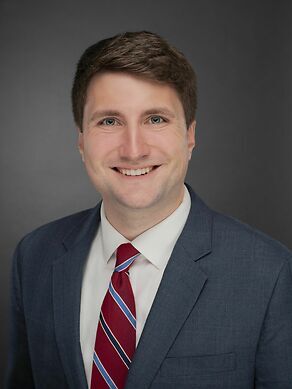
From LOI to K-1 in a Private Equity Sale: What Tax Advisors Should Know Before (and After) Closing, Umair Karowadia and
John D. Fields
When a private equity letter of intent lands, the client's CPA or other tax advisor is usually the first call. Depending on the deal, the LOI may call for rollover equity, an earnout, or a seller note, and, if the target is an S corporation, a pre-closing F reorganization, each of which carries tax consequences that are easy to miss at the LOI stage. This session walks through the tax life cycle of a lower-middle-market PE transaction from the tax advisor's perspective. Along the way, we look at why buyers insist on an F reorganization for S corporation targets, how the structure shifts when the target is a pass-through or a C corporation, when a rollover is actually tax-deferred rather than a disguised sale, and how earnouts and seller notes are taxed. We also flag the traps hidden in holding company operating agreements and the post-closing compliance the tax advisor inherits once the deal closes. You will leave better equipped to spot these issues at the LOI stage, when there is still time to do something about them.
Texas Sales and Use and Franchise Tax Updates, Bryan J. Dotson and Zachary Milliken
This session discusses recent developments in the Texas sales and use and franchise taxes. The discussion will cover key legislative changes, recent court decisions, and amendments to Texas Comptroller regulations.
When the Trust No Longer Fits: Navigating the Tax Consequences of Trust Modifications and Commutations, Brett T. Berly and Tyler Williams
Sometimes a trust may continue even after its intended purpose has been fulfilled. Or, changes in family circumstances, tax law, asset composition, or beneficiary needs may make an existing trust structure inefficient, impractical, or no longer aligned with its original purpose. Trust commutations (early terminations) and modifications may offer valuable flexibility when such issues arise, but they may also produce significant—and sometimes unexpected—federal tax consequences. This presentation will examine the potential income, estate, gift, and generation-skipping transfer tax implications from modifying or commuting irrevocable trusts. We will also highlight recent developments and key planning considerations practitioners should evaluate before restructuring or terminating a trust.
Top Employee Benefit Issues in Retirement and Welfare Plans for Plan Sponsors, Joshua A. Sutin
This presentation offers plan sponsors a comprehensive update on the most pressing legal and regulatory developments affecting employee benefit plans in 2026. The session covers welfare plan issues including ACA affordability requirements, COBRA compliance litigation, mental health parity rules and NQTL comparative analysis obligations, HIPAA updates, and emerging gender and family planning coverage disputes, alongside qualified retirement plan topics such as recent ERISA fiduciary duty litigation, 401(k) fee and forfeiture account class actions, SECURE 2.0 mandatory and optional plan amendments, and best practices for fiduciary committees. Drawing on recent case law, DOL and IRS guidance, and regulatory updates, the presentation equips plan sponsors, HR professionals, and their advisors with practical strategies to manage compliance risk and strengthen plan governance in a rapidly evolving benefits landscape.
Stick around after the seminar to unwind and connect! Join us for light bites, drinks, and great conversation as you network with fellow attendees, speakers, and colleagues. It's the perfect way to cap off the day, share takeaways, and build new connections.
If you have any questions, please reach out to Meg Grossman at meg.grossman@chamberlainlaw.com.




-1.png?width=1459&height=2000&name=Untitled%20design%20(33)-1.png)
.png?width=1465&height=2000&name=Untitled%20design%20(31).png)